How to Build a Personal Brand on LinkedIn Without Pretending to Be an Influencer
Building a personal brand on LinkedIn is not about becoming an influencer. Learn how to establish credibility, share valuable insights, and create a professional reputation that attracts opportunities over time.
InstaInker Team
InstaInker
Most people think building a personal brand on LinkedIn means becoming an influencer.
Posting every day.
Sharing motivational quotes.
Trying to go viral.
Collecting thousands of followers.
That is usually where the confusion starts.
The reality is that some of the strongest personal brands on LinkedIn belong to people who rarely go viral.
They are simply known for something.
When people see their name, a specific skill, expertise, or topic immediately comes to mind.
That is what a personal brand actually looks like.
It is not about becoming internet famous.
It is about becoming memorable.
Why personal branding matters on LinkedIn
Think about how people use LinkedIn.
A recruiter discovers your profile.
A founder receives your connection request.
A potential client clicks on your name after reading one of your comments.
In most cases, they know very little about you.
Your LinkedIn presence helps fill that gap.
People form opinions quickly.
They decide whether your profile feels credible.
Whether your experience looks relevant.
Whether they want to connect, respond, or learn more.
That first impression often happens before you ever speak to them.
This is one reason personal branding has become so important.
The biggest misconception about personal branding
Many people assume personal branding means talking about yourself constantly.
It does not.
A strong personal brand is not built by repeatedly telling people how talented you are.
It is built by consistently demonstrating what you know.
There is a big difference.
People trust evidence more than claims.
Anyone can say they are an expert.
Consistently sharing useful insights is what makes others believe it.
What a personal brand actually is
A simple way to think about personal branding is this:
Your personal brand is what people remember about you.
Not what you want them to remember.
What they actually remember:
When someone hears your name, what comes to mind?
- LinkedIn growth?
- Marketing?
- Finance?
- Recruiting?
- Design?
- Leadership?
The stronger the association, the stronger the personal brand.
That association develops gradually through consistency.
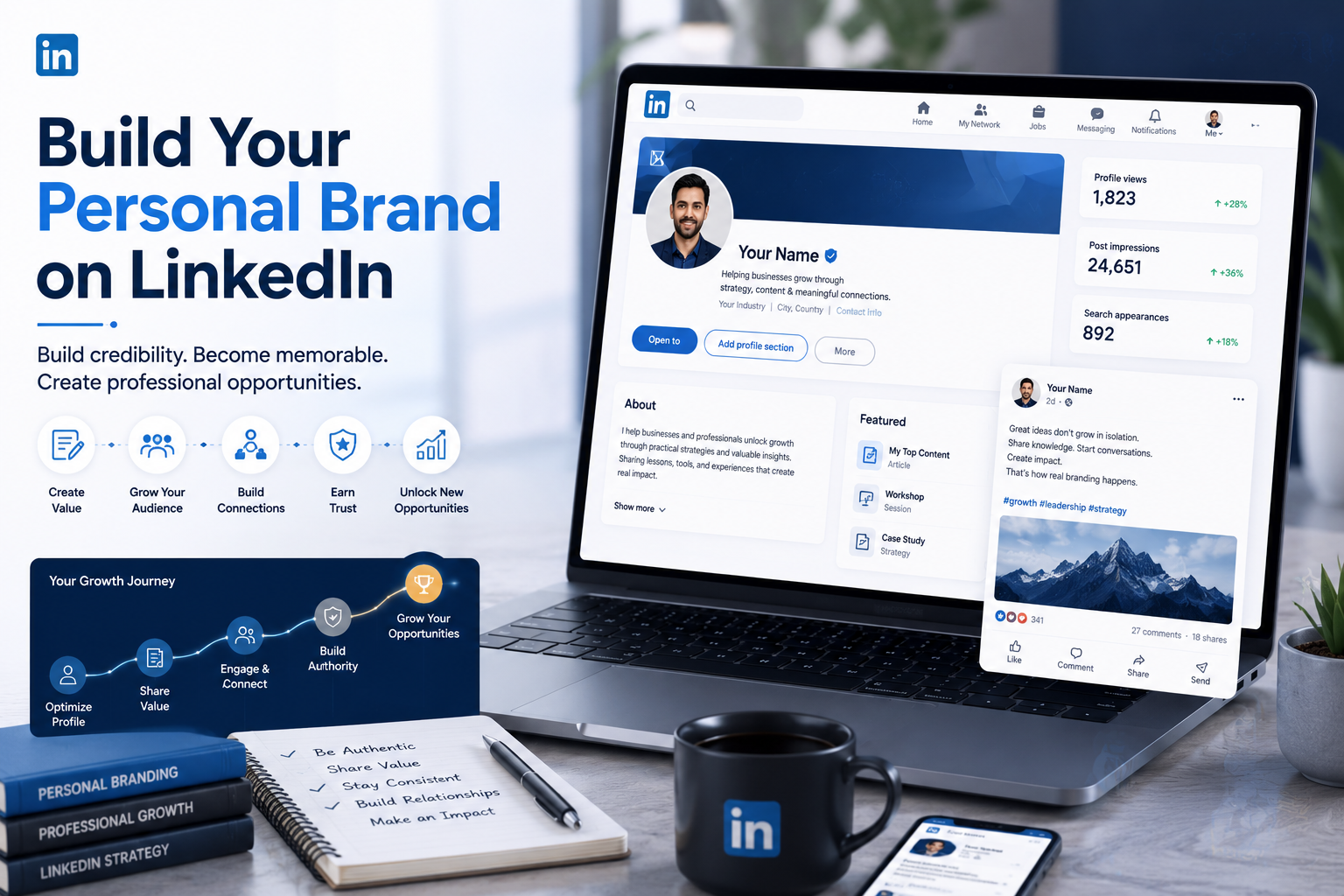
How to Build a Personal Brand on LinkedIn: A Practical Framework
Understanding personal branding is one thing. Building it is another.
If you're starting from scratch, here's a simple framework you can follow.
Step 1: Decide what you want to be known for
Before posting anything, ask yourself:
"What do I want people to associate with my name?"
Most successful LinkedIn creators focus on a few related topics instead of talking about everything.
For example:
A recruiter may focus on hiring, interviews, and careers.
A founder may focus on startups, leadership, and business growth.
A marketer may focus on branding, content, and demand generation.
People remember clarity.
If you constantly switch between unrelated topics, it becomes difficult for others to understand what you stand for professionally.
Step 2: Optimize your LinkedIn profile
Your profile is often the first thing people check after reading your content.
Make sure your:
headline clearly explains what you do
profile photo looks professional
About section communicates your expertise
experience section highlights achievements
Think of your profile as your personal landing page.
If someone visits it, they should immediately understand who you are and what value you bring.
Step 3: Start posting consistently
You do not need to post every day.
A good starting point is 2–3 posts per week.
You can share:
lessons from your work
industry observations
mistakes you've learned from
frameworks you use
opinions on trends in your field
The goal is not to impress everyone.
The goal is to consistently show people how you think.
Step 4: Engage with other people's content
Many people underestimate how powerful thoughtful comments can be.
You do not need a large audience to start building visibility.
Commenting on relevant posts, participating in discussions, and sharing useful insights can help people discover your profile.
Personal branding is not only built through publishing.
It is also built through participation.
Step 5: Stay consistent for at least 90 days
This is where most people quit.
They post for a week or maybe two and then disappear.
Personal branding takes time.
Give yourself at least 90 days before judging results.
Most opportunities come from consistency, not from one viral post.
If you follow these five steps consistently, you'll already be ahead of most LinkedIn users who approach personal branding without a clear strategy.
However, there is one more thing that many people overlook.
Your profile matters more than your content
A lot of people focus entirely on posting.
They forget what happens next.
Someone reads a post, they become interested and then they visit the creator's profile.
If the profile feels incomplete or confusing, credibility immediately drops.
This is why content and profile optimization work together.
A strong personal brand requires both.
Your profile should clearly communicate:
- who you are
- what you do
- what you are known for
without forcing visitors to guess.
The role of content in personal branding
Content is one of the fastest ways to shape perception.
Every post sends a signal.
Every insight reinforces expertise.
Every perspective helps people understand how you think.
The goal is not posting for the sake of posting.
The goal is creating useful content that aligns with the reputation you want to build.
For example, someone who consistently shares hiring advice eventually becomes associated with recruiting expertise.
Someone who shares startup lessons becomes associated with entrepreneurship.
Over time, those associations become stronger.
What Should You Post to Build a Personal Brand?
One of the biggest questions people have is:
"What should I actually post about?"
The good news is that you do not need endless content ideas.
Most personal brands are built by sharing experiences and insights you already have.
Some simple content ideas include:
Lessons you've learned
Share something work, a project, a client, or an internship taught you.
Mistakes you've made
People often relate more to lessons learned from failure than success stories.
Industry observations
Talk about trends, challenges, or changes happening in your field.
Frameworks and processes
Explain how you solve problems or make decisions.
Personal experiences
Share stories that shaped your professional journey.
The goal is not to go viral.
The goal is to consistently reinforce the expertise and reputation you want to be known for.
Why authenticity matters
People often overcomplicate personal branding.
They try to sound more professional, more impressive and more polished.
Sometimes that makes their content less relatable.
The strongest personal brands usually feel human.
They share:
- lessons
- experiences
- observations
- mistakes
- insights
in a way that feels genuine.
People connect with people.
Not corporate buzzwords.
Authenticity tends to build trust faster than perfection.
Common personal branding mistakes
Several mistakes appear repeatedly.
One is inconsistency.
People disappear for weeks or months and expect momentum to continue.
Another is copying creators instead of developing their own voice.
Some people become obsessed with trends and lose focus entirely.
Others focus so heavily on growth that they forget why they started posting in the first place.
The strongest personal brands usually develop through patience rather than shortcuts.
How Instainker helps build a personal brand
Many professionals understand the importance of personal branding.
Their challenge is consistency.
They struggle with:
- content ideas
- writing posts
- creating hooks
- maintaining a publishing schedule
This is where Instainker can help.
Instainker helps users:
- generate content ideas
- create LinkedIn posts
- improve readability
- strengthen profile positioning
- maintain consistency
The goal is making personal branding easier to sustain over time.
Because personal branding is rarely built through one great post.
It is built through repeated visibility and consistent value.
Final thoughts
Building a personal brand on LinkedIn does not require becoming an influencer.
It does not require going viral.
It does not require posting motivational content every day.
A strong personal brand is simply a reputation at scale.
It is the result of consistently showing people what you know, how you think, and what you care about professionally.
The people with the strongest personal brands are not always the loudest.
They are often the most consistent.
Over time, consistency becomes recognition.
Recognition becomes trust.
And trust creates opportunities.
Related Articles
Start Creating Better LinkedIn Content
Use InstaInker to generate engaging posts tailored to your style.
Get Started Free